Afar culture
Afar Cultural Values
The Afar people have a proud social life, a strong cultural tradition, and their own long-standing systems.
These traditions have been passed from generation to generation while preserving their original character.
This digital document introduces important parts of Afar culture, including songs and dances, traditional clothing and ornaments, handcrafts, household objects, social cooperation, historical heritage, and marriage customs.
The cultural values presented here are organized into sections so that readers can understand the richness of Afar heritage in a clear and accessible way.
Chapter One
Traditional Songs and Dances
Afar traditional songs and dances are diverse and widely practiced.
They are performed at weddings, religious and social celebrations,
and other community gatherings. Some performances are practiced by men,
some by women, and others by both together.
Hora: An old traditional dance performed mainly by men. Participants usually hold a gile knife in the right hand and lift the legs in a coordinated way. It is performed during journeys to war, Eid, weddings, and other occasions.
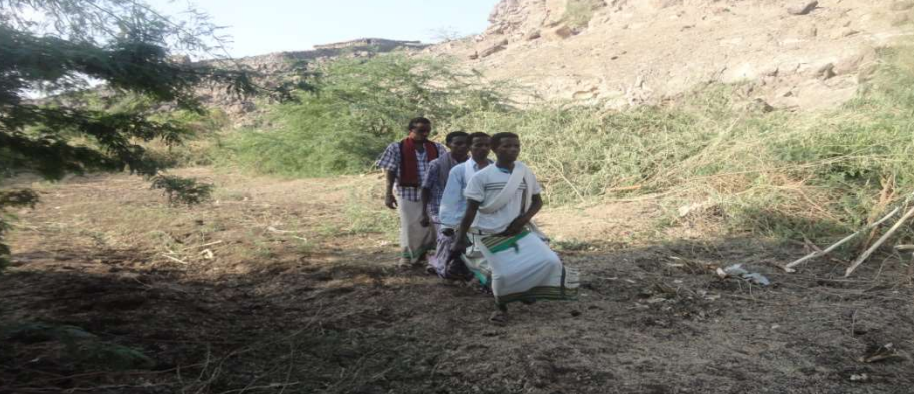 Hora Traditional Dance
Seda’a: A dance in which different genders may participate,
but it is also performed by young women alone.
Mature young people
may participate together with the opposite gender.
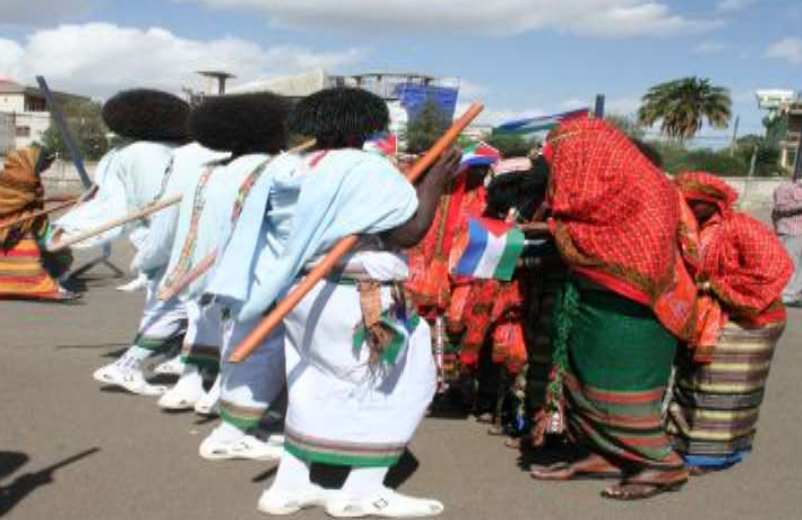 Seda’a: Traditional Dance
Tirtira: A performance of boasting and heroic expression, commonly
associated with going to war and returning victorious.
It is especially known among elders and clan groups.
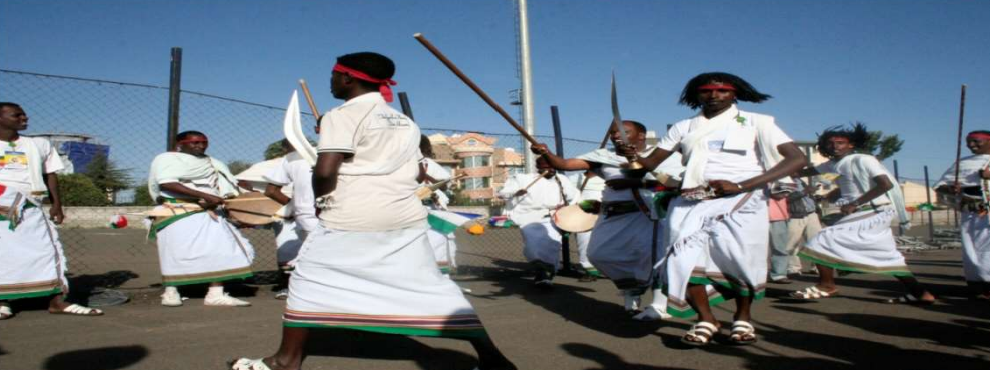 Tirtira Traditional Motiviational (Dance)
Lale: A festival dance performed by men, accompanied by singing, clapping, and energetic foot movements.
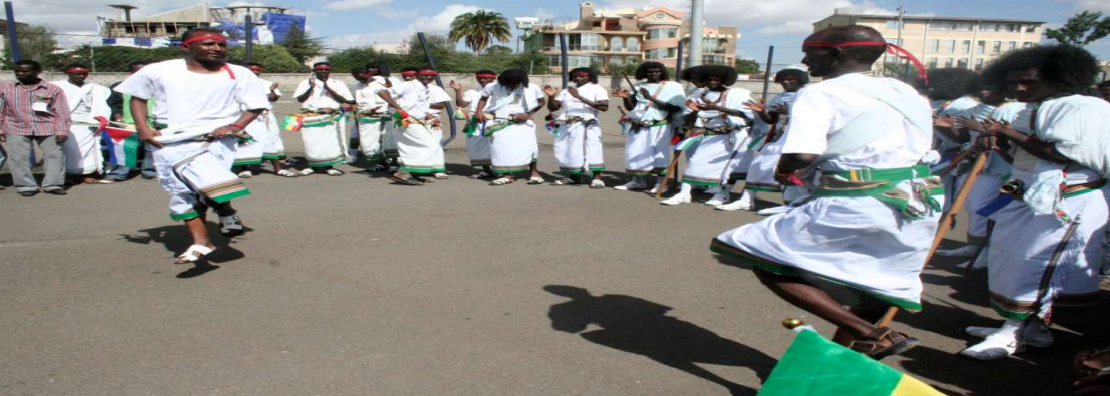 Laale Traditional Dance
Keke: A dance performed by men and women together during festive occasions, accompanied by singing, clapping, and jumping movements.
Keeke Traditional Dance
Melabo: A women’s dance often performed during weddings and Eid celebrations.
Women stand in two rows, hold the gile, and move in circles depending on the available space.
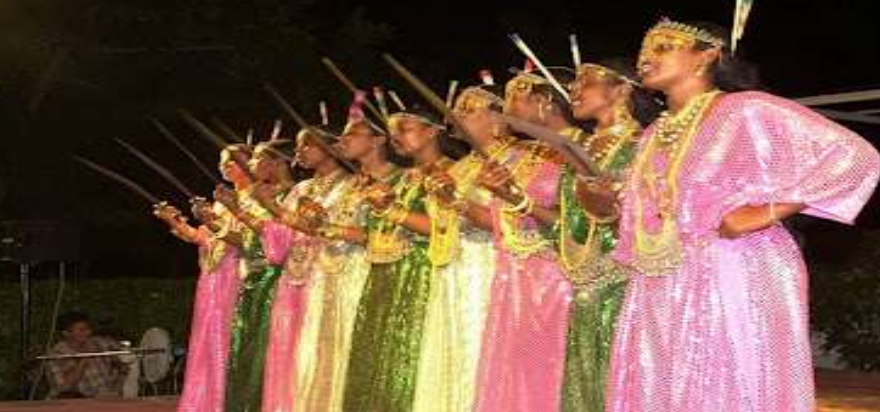 Malaabo Traditional Dance
Ko’oso: A traditional game played by young men from different clans in two opposing teams.
It tests strength, endurance, speed, and stamina, and is usually played during holidays, weddings, and harvest seasons.
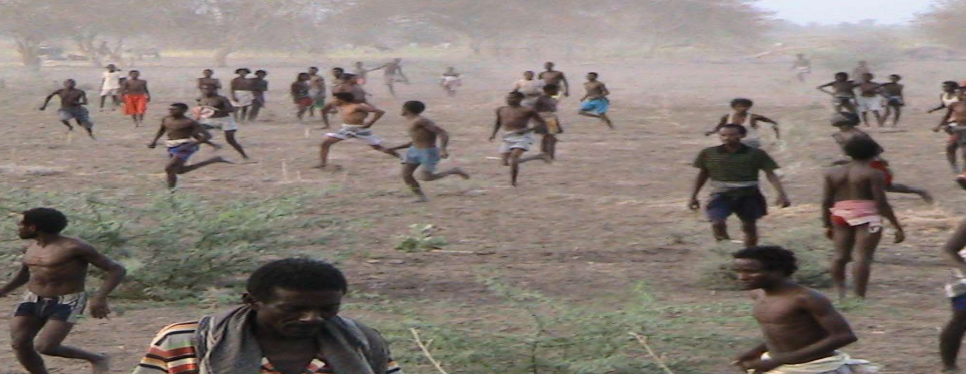 Ko’oso: the Afar traditional boall game
Chapter Two
Traditional Clothing and Ornaments
The Afar people have their own traditional clothing and ornaments. Ornaments may be made from gold, silver, brass, copper, shells, and beads, and are worn on the head, ears, fingers, arms, and legs.
Ubuke: A women’s garment worn below the waist like a skirt.
Mesnefa: A men’s white wrap worn like a sarong.
Rerayto: A men’s shoulder cloth.
Traditional ornaments include Ferranto rings, Albo women’s leg ornaments, Bagi Arumu leather waist belts, Haleyta women’s girdles, Agbi Kebela women’s footwear, Kirdo women’s leg ornaments, and different bracelets and necklaces for men, women, and children.
Men also adorn themselves with the gile, dagger, gun, and walking stick. A wooden comb called filey is used to care for decorated hair, and a wooden headrest is used to protect the hairstyle while resting.
Chapter Three
Traditional Handcrafts
Afar women make many household items by hand from leather and palm fiber. Palm fiber is dyed in different colors and prepared for sewing. Soft leather, beads, and shells are used to make household materials beautiful and attractive.
The craft knowledge is passed down through families, especially from mothers to daughters.
Today, women continue to organize and present these traditional products in different towns.
Important traditional items include mats and bedding materials, milk containers, water containers, leather bags, tools, decorative wall hangings, entertainment items, and stone objects such as grinding stones and mortars.
Chapter Four
Fi’ima: Afar Social Cooperation
Human beings have always lived by sharing happiness and hardship. Among the Afar, traditional forms of cooperation help people deal with social and economic challenges, especially in rural life. These systems support people during joy, mourning, farming, household work, weddings, funerals, and other shared responsibilities.
Fi’ima is a traditional youth and community group. Its members help maintain peace and security, support the sick, host guests, assist during weddings, prepare graves during funerals, and perform other community duties.
This system shows the Afar value of mutual support, collective responsibility, and social solidarity.
Chapter Five
Afar Traditional Marriage
Afar society has its own cultural, social, economic, historical, religious, and moral systems. Marriage customs are an important part of this identity. Marriage may connect clans within Afar society and may also create ties with neighboring peoples.
There are two main types of Afar marriage:
Absuma and Faydi / Fayxi: Absuma is a cross-cousin marriage system that strengthens ties between related clan groups.
Faydi/Fayxi is a marriage based on choice outside the kinship obligation.
Wedding preparations include family negotiations, gifts, community support, songs, dances, food preparation, and religious marriage rites. Guests often contribute food and other gifts rather than only money. Dagu, the Afar information-sharing tradition, is also practiced when people meet on the way to the wedding.
After the wedding, the bride receives gifts and support from relatives and friends.
The couple may spend a period near the bride’s family while the bride learns household responsibilities and prepares for married life.